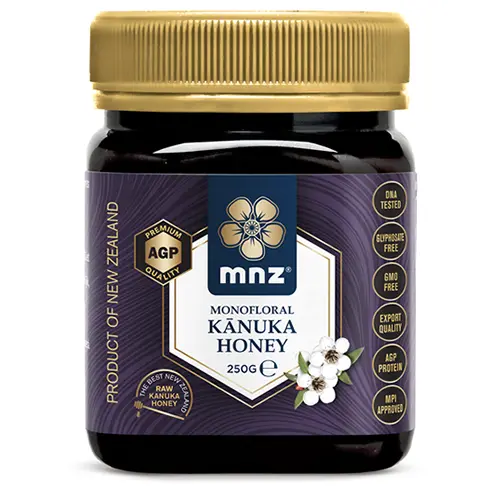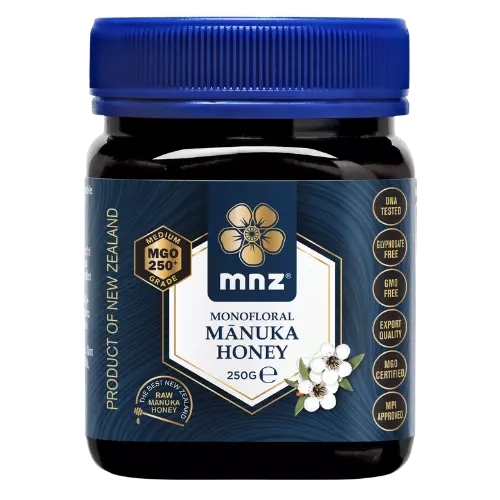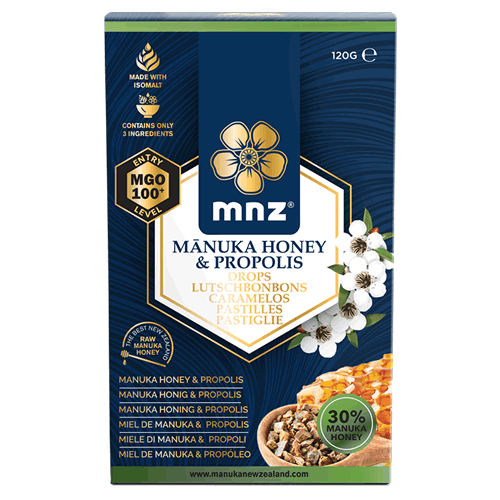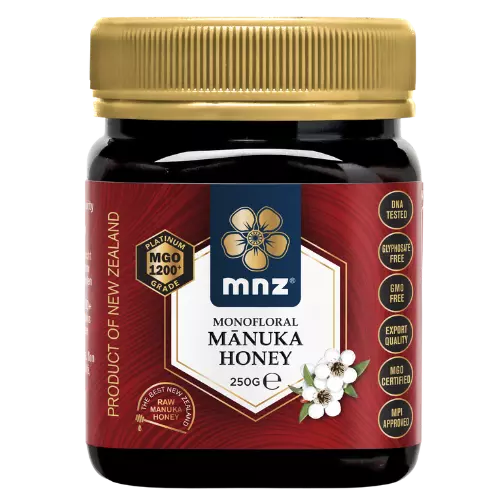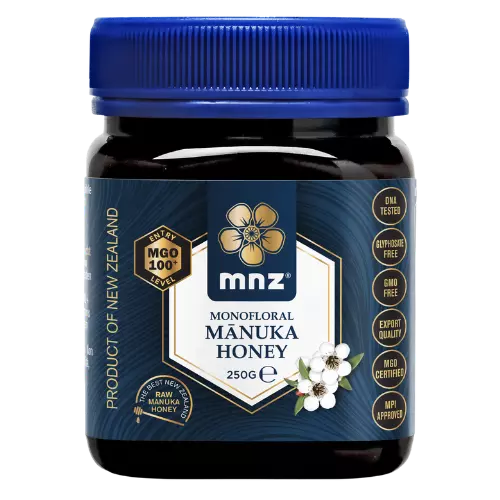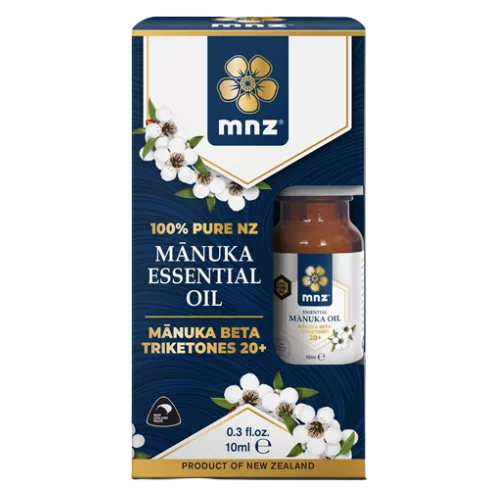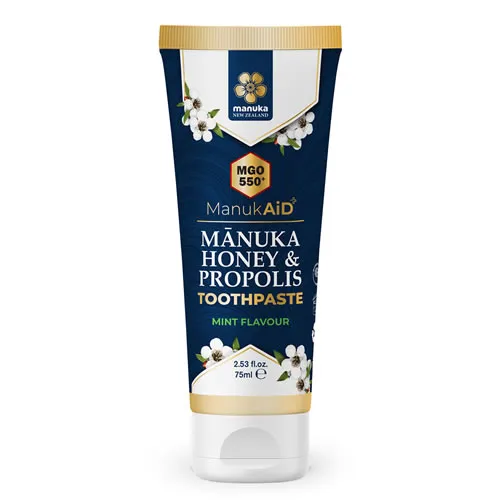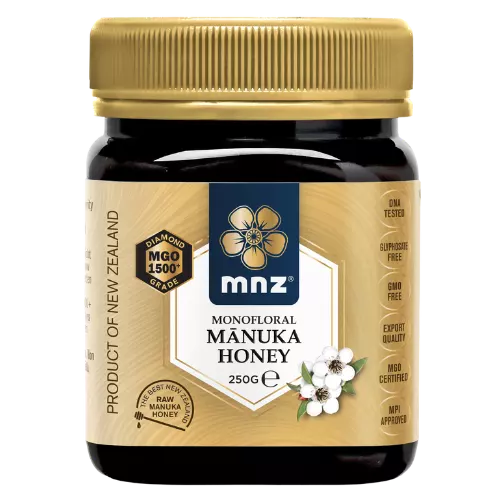

















What is Manuka honey?

Manuka honey comes from the Manuka tree (Leptospermum scoparium), which grows naturally in New Zealand. It is one of the most carefully studied honeys in the world and is known for its high quality and natural activity. This honey can only be produced during a short period each year, when the Manuka tree is in bloom. Because this flowering window is limited, true Manuka honey is relatively rare. The nectar of the Manuka flower contains natural compounds that give this honey its distinctive character. It combines the traditional qualities of honey with the unique properties of the Manuka tree.

The character of Manuka honey is closely linked to New Zealand’s natural environment, including:

  • Unspoiled landscapes where native plants can grow naturally.
  • Clean air and water that support healthy vegetation.
  • Changing weather conditions that shape and strengthen the Manuka tree.

Together, these natural factors create a honey that reflects the purity and strength of New Zealand’s environment, making Manuka honey one of the most valued honeys in the world.
Who is Manuka honey for?

New Zealand Manuka honey is a natural food that has been widely studied and is valued around the world for its distinctive properties. Thanks to its natural origin and versatility, it can be used by many different people, including:

  • People aged 1 year and older: Like all honey, Manuka honey is suitable for anyone over the age of one.
  • People mindful of sugar intake: Manuka honey has a moderate glycaemic index and can be used in a balanced diet, including by people who carefully manage their sugar levels.
  • Animals: In appropriate situations, Manuka honey is also commonly used for animals.

Its natural character, careful production and wide range of uses make New Zealand Manuka honey a special product for both people and animals.
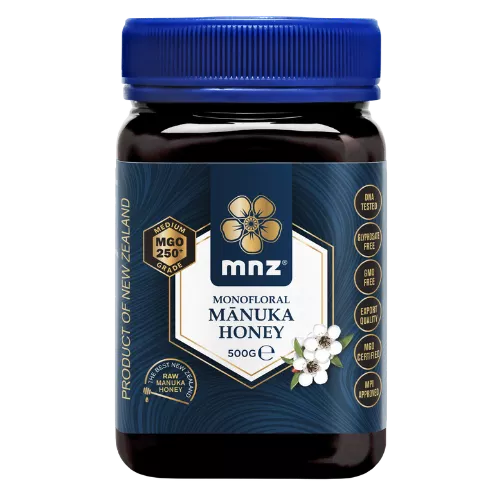
Why choose raw Manuka honey?

Raw Manuka honey is honey in its natural state. It is handled as little as possible, so its original character stays intact. This is what sets raw Manuka honey apart:

  • Pure and minimally processed: Not pasteurised or heavily heated.
  • Naturally rich: Keeps its naturally occurring nutrients.
  • Natural enzymes: Contains enzymes that are part of raw honey.
  • Natural amino acids: Includes amino acids that occur naturally in honey.
  • Natural texture: Thicker and slightly grainy, just as raw honey tends to be.
  • Full flavour and aroma: A deeper, more complex taste and scent.

Raw Manuka honey offers an authentic honey experience, with its natural texture, flavour and character fully preserved.
What does MGO (Methylglyoxal) mean?

MGO (Methylglyoxal) is a natural compound found in Manuka honey. It plays an important role in what makes Manuka honey different from other honeys.

  • How MGO develops: MGO forms naturally from DHA (Dihydroxyacetone), a substance present in the nectar of Manuka flowers. As the honey matures over time, DHA slowly converts into MGO.

  • Why it matters: The MGO level is used to indicate the strength and character of Manuka honey. Higher MGO values reflect a higher concentration of this naturally occurring compound.

This natural process is one of the reasons why Manuka honey is so distinctive and valued worldwide.

Which Manuka honey is right for me?

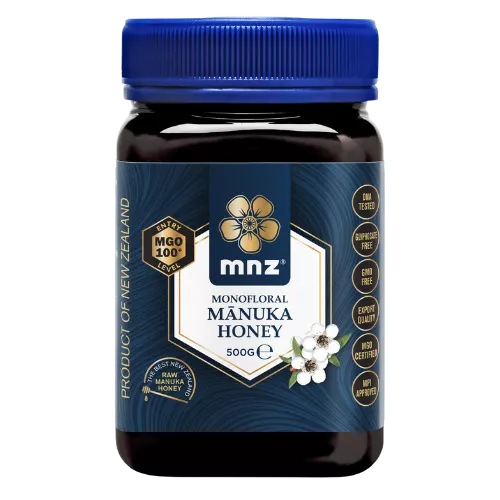
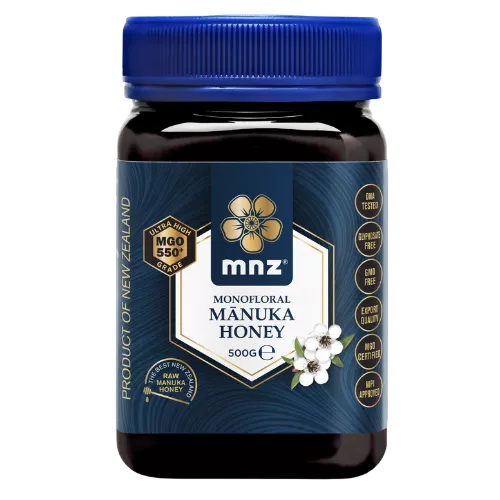
MNZ offers Manuka honey with different MGO levels. Each level reflects a different natural concentration, so you can choose what best fits your routine.

Understanding MGO

MGO shows the concentration of a naturally occurring compound in Manuka honey. A higher number means a higher concentration. All MNZ Manuka honey is suitable for anyone aged one year and older.

MGO levels at a glance

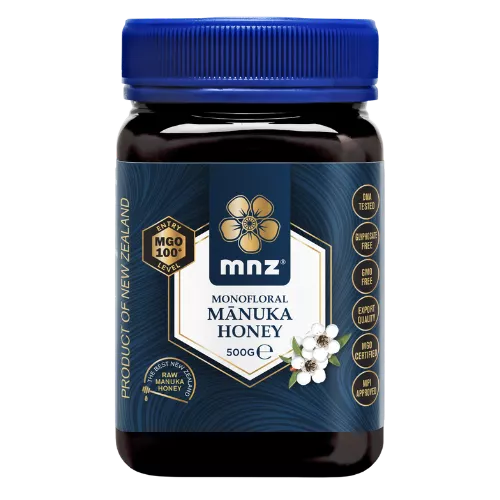
  • MGO 100+ – Everyday use, mild and accessible.
  • MGO 250+ – Popular with active lifestyles.
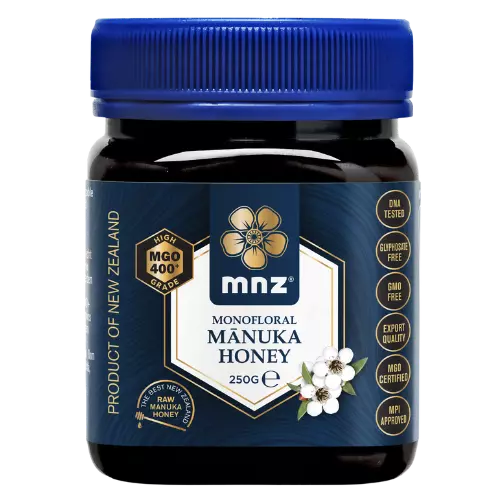
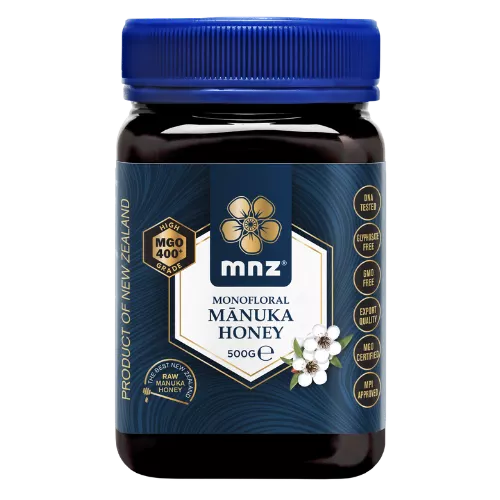
  • MGO 400+ – Often chosen for seasonal or skin use.
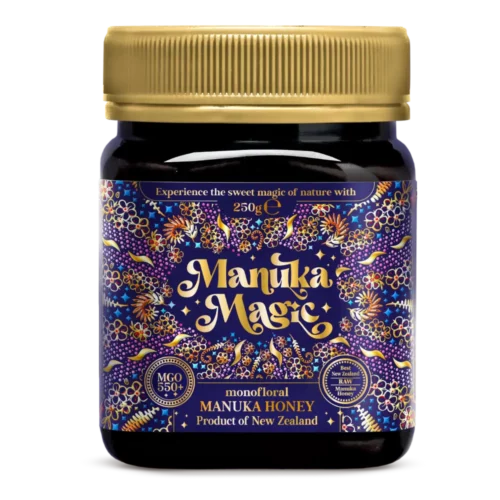
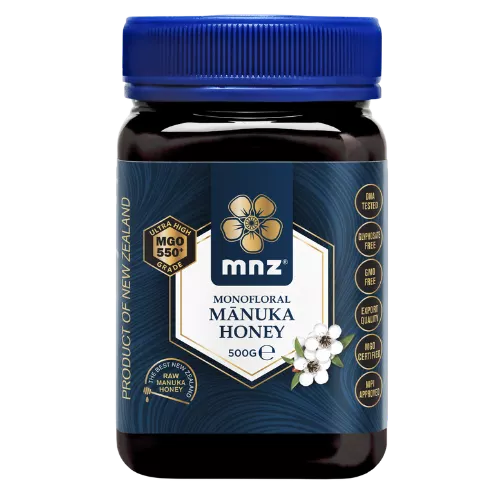
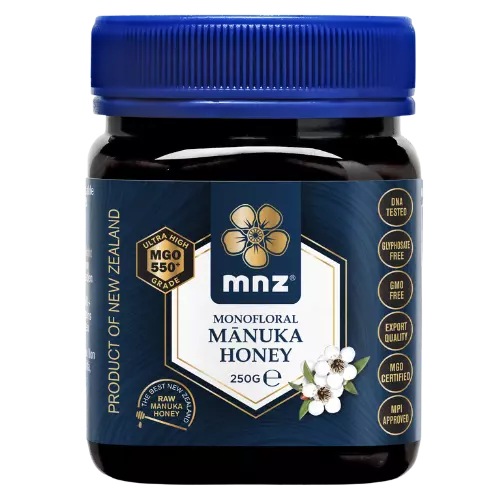
  • MGO 550+ – Higher concentration, versatile use.
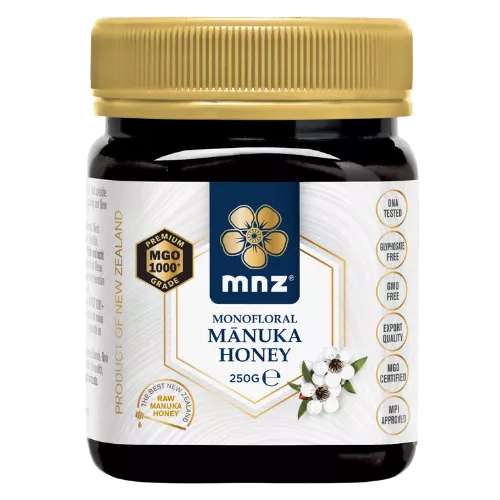
  • MGO 1000+ – Very high MGO, used in small amounts.
  • MGO 1200+ / 1500+ – Rare, exceptionally concentrated.

How to use

  • By the spoon – Take a small amount directly.
  • With lukewarm water – Stir gently, never hot.

MNZ Manuka honey fits easily into daily life, whether enjoyed for taste, quality ororigin.

How can Manuka honey be used?

MNZ Manuka honey is versatile and can be used both internally and externally as part of everyday care.

Internal use

  • By the spoon: Take a small amount directly, often on an empty stomach.
  • With water: Mix a teaspoon into lukewarm water.
  • With food: Use as a natural sweetener in meals or drinks.

External use

  • Skin care: Apply directly to the skin as part of a care routine.
  • Problem areas: Commonly used on irritated or blemished skin.

Its natural composition makes Manuka honey suitable for a wide range of everyday uses.

What do we know about Manuka honey?

Since the late 20th century, Manuka honey has been widely studied by scientists around the world.

  • 1980s–1990s: Early research focused on identifying what makes Manuka honey different from other honeys.
  • 2006: Methylglyoxal (MGO) was identified as a key naturally occurring compound in Manuka honey.
  • Today: Research continues into its composition, plant markers and botanical origin.

Does Manuka honey have bioactive properties?

Scientific studies have shown that Manuka honey behaves differently from many other honeys due to its natural composition.

Ongoing research has helped define how compounds such as MGO contribute to this profile, supporting Manuka honey’s reputation as a well-documented and carefully studied natural product.

MNZ PRODUCTS

All MNZ products are made using our own high-grade, raw Manuka honey. By keeping the honey raw and minimally processed, we preserve its natural character. This careful approach ensures products that are pure, authentic and true to the nature of Manuka honey.

Is Manuka honey good for everyday use?

Honey has been valued as a natural food for centuries. Raw Manuka honey continues this tradition and fits easily into a balanced lifestyle thanks to its natural composition.

  • Naturally rich: Contains naturally occurring nutrients.
  • Natural enzymes: Present in raw, unprocessed honey.
  • Amino acids: Occur naturally in honey.
  • Natural texture: Thicker and slightly grainy.
  • Distinct taste: Full aroma and flavour typical of Manuka honey.

Raw Manuka honey combines nutritional value with a genuine taste experience.

How is Manuka honey commonly used?

Manuka honey is versatile and can be enjoyed in different ways.

  • As food: Taken by the spoon or used as a natural sweetener.
  • With drinks: Mixed into lukewarm water or tea.
  • For active lifestyles: Often used as a natural energy source.
  • Skin care: Commonly applied to the skin as part of a care routine.

Its natural character makes Manuka honey suitable for both internal and external use.

Is all Manuka honey genuine?

Because Manuka honey is in high demand, authenticity is important. Not all products on the market meet the same standards. At MNZ, all our raw Manuka honey is carefully tested before it is released. This ensures clear origin, verified quality and full traceability. Read more about our Quality Guarantee.

Is MNZ Manuka honey raw?

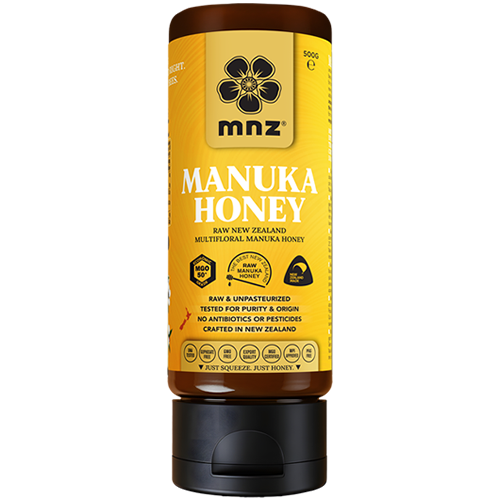
Yes. MNZ produces only raw Manuka honey. We do not pasteurise or heavily process our honey. By keeping the honey in its natural state, its original character is preserved. This reflects our choice to stay as close as possible to nature and tradition.

What is the difference between creamed and raw Manuka honey?


Raw Manuka honey is honey in its natural state. It is not pasteurised or heavily heated, which means its original character is preserved. One natural feature of raw honey is that it may crystallise over time. This is completely normal and a sign that the honey has been minimally processed.

Why does honey crystallise?


Honey contains a high amount of natural sugars and very little water. At warmer temperatures, it stays liquid. At cooler temperatures, part of the sugar slowly crystallises.

  • In the hive, honey stays liquid due to warmth.
  • At lower temperatures, crystals can form naturally.
  • Crystallisation does not reduce quality or flavour.


Crystallisation can happen evenly or in layers, and the texture may become finer or slightly grainy. This also explains why crystallised honey often looks lighter in colour.

Raw Manuka honey – what to expect

  • Naturally occurring enzymes and nutrients.
  • Naturally present amino acids.
  • A thicker, slightly grainy texture.
  • A rich, distinctive Manuka flavour.

How MNZ produces raw Manuka honey

  1. Gently extracted at low temperatures.
  2. Collected directly from the honeycombs.
  3. Lightly filtered to remove wax particles.
  4. Filled into jars without pasteurisation.

Traditional extraction


Honey is traditionally extracted by centrifugation, a method that removes wax without applying heat. This helps keep the honey as close as possible to its natural state.


The texture, crystallisation and flavour of raw Manuka honey are all part of what makes it a natural, authentic product.

MNZ produces only raw Manuka honey


MNZ works exclusively with raw, monofloral Manuka honey. Our honey is produced, processed and packed in New Zealand, with care taken at every step to preserve its natural character.


We package our honey in BPA-free containers, offering a safe and considered choice. Each jar reflects the purity of New Zealand’s natural environment.

Creamed Manuka Honey

Creamed Manuka Honey is a product of homogenization, a process that controls the formation of crystals and gives the honey a smooth, spreadable consistency. Here’s an overview of how this process works and the steps involved:

Creaming Process

The goal of creaming honey is to produce a uniform structure and fine crystals, typically less than 25 microns (0.025 mm). This process involves aerating and mechanically mixing the honey to prevent larger crystals from forming, resulting in a smooth and spreadable texture.

Key Steps in the Production of Creamed Manuka Honey:

  1. Extraction (40° C – 65° C):
    Honey is extracted from the honeycombs at a controlled temperature between 40° C and 65° C to make it more fluid, although this heating process increases HMF (Hydroxymethylfurfural), a compound that rises with heating.

  2. Honey Collection:
    The honey is collected in large honeycombs, which may contain some impurities such as bee residue and wax.

  3. Initial Filtration:
    The honey is filtered to remove large pieces of stray wax and other bee residue.

  4. Fine Filtration (200 microns):
    A second round of filtration removes even smaller particles and residues, ensuring a smoother consistency.

  5. Temperature Increase (40° C – 65° C):
    The honey is heated again to make it even more fluid, further reducing the crystallization rate. However, this step also increases the HMF levels, which can affect the quality of the honey.

  6. Aeration and Stirring (Up to 2 Weeks):
    The honey is aerated and stirred for up to 3 days to 2 weeks. This step incorporates air into the honey and allows fine crystals to form, giving the honey a creamy texture.

  7. Mixing (10-15 Minutes Several Times a Day):
    The honey is mixed for 10-15 minutes several times a day to ensure uniform texture, while it is gradually cooled back to a temperature of 12-15°C.

  8. Filling Jars:
    Once the desired consistency is achieved, the creamed Manuka Honey is carefully filled into jars, ready for packaging.

Implications of the Process:

  • Homogenization and Aeration:
    The creaming process results in a smooth, spreadable texture similar to chocolate creams, making it ideal for use as a spread. The honey retains a uniform texture over time, but some of its natural enzymes and nutrients may be affected by the heating and filtration steps.

  • Comparison with Raw Honey:
    Unlike raw honey, which is left unprocessed to preserve all of its natural bioactive properties, creamed Manuka Honey undergoes heating and filtration, which can reduce some of its nutrient content and natural enzymes.

While creamed Manuka Honey provides a convenient and smooth option for consumers, raw Manuka Honey remains the choice for those seeking to preserve the full spectrum of natural bioactive benefits.